
“…everyone’s more comfortable being themselves. So now we can come out as a Gaeilgeoir as well.” – Aideen McQueen
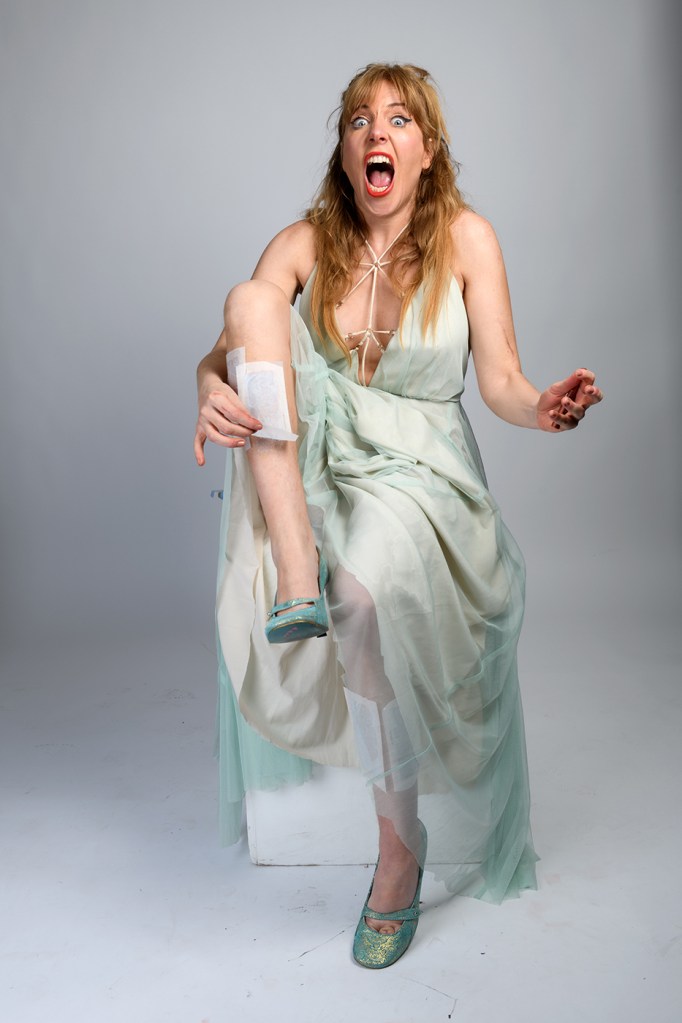
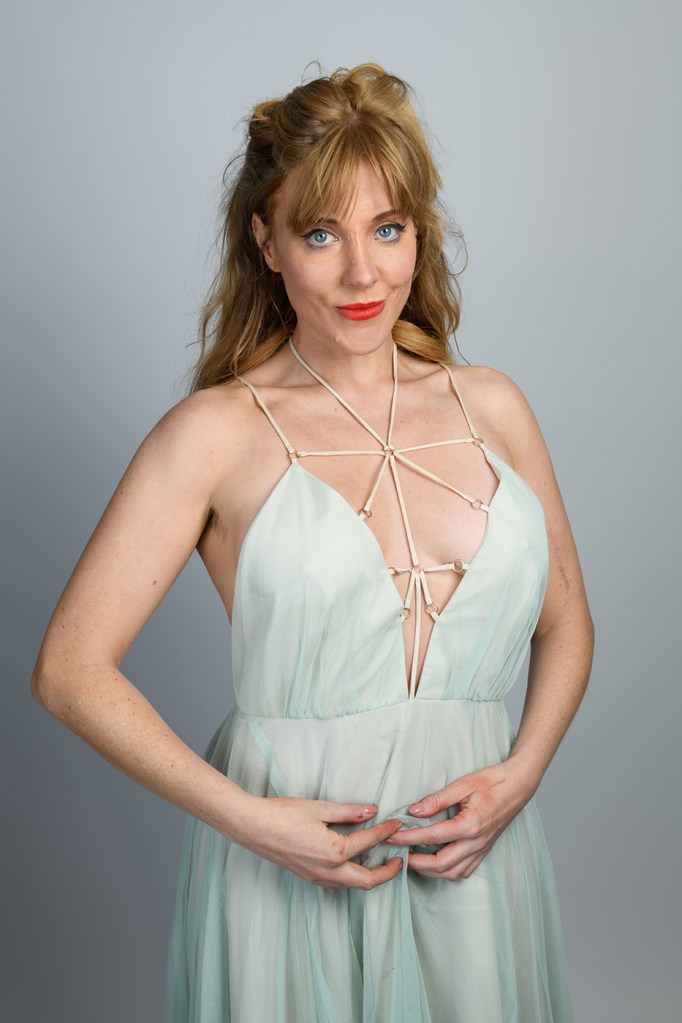
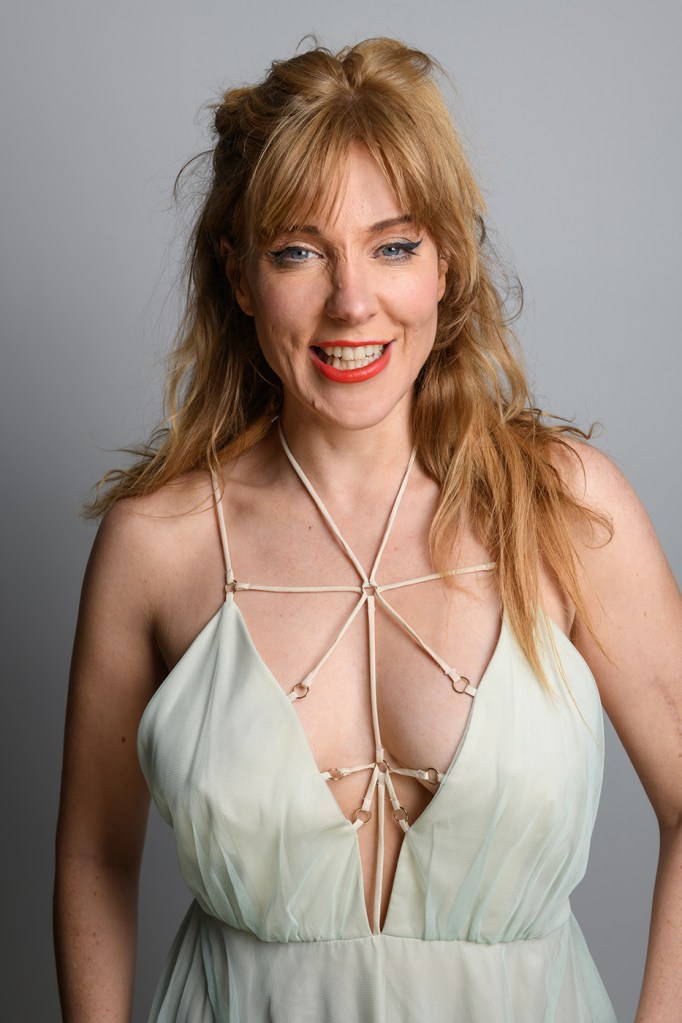
Aideen McQueen is originally from Kilkenny. One of Ireland’s top stand-up comedians, Aideen is currently gigging her solo show, Waiting For Texto.
Publication 6 of 2026

A chairde, I hope everyone’s enjoying the Spring after a long Winter in Ireland. Following my interview with Mollie Guidera (@IrishWithMollie), here’s another really interesting one with Aideen McQueen (@ComedyMcQueen). Tá súil agam go mbaineann sibh sult as!
Cill Chainnigh le Gaeilge
Irish Language Matters (ILM): Aideen, where’s your Irish from – did you have it in the home?
Aideen McQueen: Yeah, so my Dad was an Irish teacher. He didn’t speak Irish at home but he’s from South Kilkenny, so Ballyhale, hurling country – Henry Sheflin, T.J. Reid, a lot of the greats and you mightn’t know this but the last native speakers in Leinster were in Louth and Kilkenny. So, the last native speaker in Kilkenny died in the 1940s. He was in his 90s. So that’ll just tell you that the language doesn’t disappear in one generation.
My dad’s parents would have been born before Ireland was independent so my granddad was born in 1898 and my grandmother in 1913. They would have been educated in the old British system. They didn’t learn Irish in school but they would have had a lot of phrases – even some full sentences in Irish – and a lot of words. So my dad would have heard a lot of Irish and he always loved the language and so he got a scholarship to become a priest, he went to Maynooth and he studied Irish. Then his own father died and he had to go back on the family farm and he left the seminary, but he was educated so that was great at the time in the 1960s – and the free education came in – so he became a teacher and he taught in Kieran’s college, the home of hurling. I don’t know if you follow hurling?
ILM: Not really.
Aideen McQueen: Where are you from?
ILM: Templeogue originally. [Faughs and St Judes GAA clubs are there. My mother’s actually from Bonnetstown, Lacken, Co. Kilkenny]
Aideen McQueen: Kieran’s would be one of the places where hurling’s very strong. Everybody went there. But he was a teacher up there. Then, when I was born – he didn’t discuss it with my mother – he just started speaking Irish to me and then two other sisters so we only spoke Irish with my father, with my mother we spoke only English. She has school Irish but with my Dad it was all as Gaeilge, which at the time was really unusual. He might as well have been speaking Latin in Kilkenny. But, sure then of course that was great ‘cause I always had Irish then, so second nature – first nature really.
ILM: I was aware of Omeath as being the home of the last native speaker in Leinster [Anna Uí Annluain or Anne O’Hanlon of Omeath d.1960, recording of Anna speaking Oriel Irish] but I wasn’t aware that Kilkenny lasted that long.
Aideen McQueen: South Kilkenny, yeah, and they have recorded the last speaker [Pádraig Paor or Patrick Power of Glenmore, d. 1939 or 1942, written text available from Dúchas.ie] in the forties he’d a very different accent. The ‘r’ caol, so they present an ‘r’ as ‘s’, so Éire was Éise.
ILM: Would this have been similar to the Munster dialect, then?
Aideen McQueen: No. Surprisingly, different to the Munster dialect. Not totally different but a lot of differences and there’s books on it. You can look at all the phonologies and the ways it was spelled but there was a Leinster dialect that was separate and maybe even a little bit like what they spoke in the Isle of Man.
ILM: All of that is really interesting – the language shift and the different times it happened in different counties, and so on.

Shame, and The Grift
“He’s Church of Ireland, very nice!”
IrishLanguageMatters: I’ve heard some people raised with Irish saying that there was this sense of shame or embarrassment for being different when they were teens or the early 20s or whatever, and I think that’s really interesting – the amount of psychological baggage we have in relation to the language.
Aideen McQueen: Yeah, there would have been. I did a programme with a star of TG4 more than 10 years ago and they would always speak English to you whenever they could, like the cool person that they are, and I was like, “Come on”.
ILM: Really?
Aideen McQueen: Yeah, I’m sure they’ve probably changed now ‘cause more people are speaking it, but yeah even people in the Gaeltacht have that. They used it as, “I can get into college. I can do primary school teaching”, like they used it when they had to and they used it for TG4 but then they weren’t really that wa-woo with the teanga…
ILM: So, it was like an economic vessel?
Aideen McQueen: I think a lot of people, it’s a bit of a grift for them, but now like outside the Gaeltacht people are really getting into it, so yeah, I’m sure they were embarrassed because I could see them being embarrassed by it, or just always wanting to go to English. So yeah, it would have been like we would have like we’re speaking Irish and other kids were going “Are you speaking Irish?” and then they try to make you say stuff and they couldn’t really quite believe it – what does this mean and what does that mean? “What’s penis in Irish?” Older boys like kind of bullying you but it’s changed. My sister now is raising her kid Aifric as Gaeilge – she’s only a year and-a-half. My sister married someone from the Church of Ireland, so she’s done well.
ILM: Married into money?
Aideen McQueen: She did, in fairness to her, or as my mother says (whispers) “He’s Church of Ireland, very nice!”
ILM: I’m sure you get a lot of material from this!
Aideen McQueen: I wouldn’t do it – she’d kill me. She’s now speaking Irish to her kid and we all speak Irish to Aifric, and in fact your man is good at languages so he’s picking it up, like he’s open to it even though he would have gone to one of the rugby schools where they don’t emphasise it.

I was like, “Oh my God they’re going to bully us now. They’re going to steal Aifric’s lunch money and they’re gonna invest in their stock portfolios”.
Changing Attitudes, and Class & the Irish Language
Aideen McQueen: We were down at this very posh Dublin 4 like David Lloyd, it’s like a really posh gym with the David Lloyd kids, and we’re down at the balls and we’re ag labhairt le hAific as Gaeilge agus ag súgradh agus ag spraoi agus ag imirt, and all these kind of Dublin 4 girls, you know the cool girls? They’re about 7. They came over, and I was like, “Oh my God they’re going to bully us now. They’re going to steal Aifric’s lunch money and they’re gonna invest in their stock portfolios”. I don’t know what they do in Dublin 4. And they’re like, “Are you guys speaking Irish?”, and I was like yeah, yeah. “I know Irish,” and then they weren’t in a Gaelscoil but they started coming out with loads of phrases and we were ag caint as Gaeilge and we’re having a great craic.
Even 10 years ago, children didn’t like Irish that didn’t go to Gaelscoils but now they were very positive towards it and in a place where I would have thought… ‘cause economically Irish is kind of the language of the working class and the lower middle class. Irish was an opportunity for you to get into university, Irish was an opportunity for you to get into the civil service, you could be a teacher; so it was a leg-up for people that were working class or lower middle class. There’s two Gaelscoils in Baile Munna (Ballymun) for instance. But the upper class and the upper middle class – the solicitors, the barristers, engineers, doctors; people who go to rugby schools – they don’t need Irish, and they don’t emphasise it at all. So they would generally be like looking askance at you if you spoke it, but that (experience) was like, “Oh, they do have a positive attitude towards it”, so that was good.
ILM: Yeah, there’s definitely a bit of a shift. It’s funny when you go to Belfast, the perception of some at least is that the Gaelscoileanna movement in Dublin is very much middle class, and that’s not always the case, as you said.
Aideen McQueen: No, it’s not. I mean there’s definitely – I did a sketch on my Instagram about the mother who’s trying to get a kid into the Gaelscoil, “The Gael School”, and she’s totally faking her interest.
ILM: “Rían with the fadas”?
Aideen McQueen: Yeah, but there’s a lot of normal kids, there’s black kids, there’s Polish kids, there’s all sorts of kids in Gaelscoileanna as well. I was in the Gaelscoil in Coolock. It’s just that there isn’t enough of them and the government don’t really care about it, and the government might put a bit more emphasis on Educate Together at the moment ‘cause that’s more kind of fashionable, I think.
But to start up a school it takes a lot of effort. Hopefully it’ll keep growing because the demand for it is high. People would love to send their kids to the Gaelscoils. And then people are scared to send a kid to a new school, ‘cause you will have one teacher in room. Like with my dad was involved in starting a Gaelscoil in 1984 in Kilkenny. The Gaelscoil was in a hall in O’Loughlin Gaels GAA club, and the teacher, Múinteoir Siobhán, who taught me, every morning she’d have to pick up cans and cigarette butts, ‘cause the GAA club is also the bar and everything like that. It was totally unsuitable. There’d be men coming in and out. So, it’s a bit of a leap sometimes, yeah.
ILM: Absolutely. When my kids started in their Gaelscoil there was a portacabin – mice, frogs, plenty of wildlife for them to enjoy – but yeah it took years for the building to come about.

We should see it more as a game, as fun, like a music rather than a language…
So yeah, psychology is my background and what I find fascinating is that there’s this, like I say, there’s baggage, maybe shame for people speaking publicly or whatever – at least in the past. There’s also shame for learners like myself about not having it. So, you kind of get it on both sides.
Self-hating Irishman syndrome & Irish as Music
Aideen McQueen: I think that’s a lot of self-hating Judaism or self-hating Irishman syndrome. Irish language speakers don’t care that you don’t speak Irish really. It’s the way the guitar players don’t care if you don’t play the guitar. They’re not like, “Oh you’re not playing an instrument?”. Like Irish is a dead language really, which is also its gift.
ILM: In what sense?
Aideen McQueen: Because if the language is not really used – it’s not necessary for administration, it’s not necessary in the court of law – it can be used, but that gives you a great freedom. If it’s a dead language then it becomes a living music, it becomes something that we can only enjoy. It becomes something that we can make mistakes in. It’s something that we can evolve. It’s something that we can break the rules of. If you don’t put the ‘h’ in the right place, it’s not like [plays drum riff on the table], “Oh no, that’s terrible”. Like, who cares?
So, we should see it more as a game, as fun, like a music rather than a language, ‘cause we’ve got freedom to play with it, ‘cause we don’t really have to have it, and that’s a scary thing for people to kind of get their heads around. But we can embrace that, and maybe not to be so rigid in the gramadach and so rigid in the spellings and things like that. That it’s a living, breathing language, that it’s fun; and that it’s to be enjoyed, not endured. Like, it’s hard for learners, they come and they think “Oh, I’m going to be totally judged”, like everyone is this Gaeilge Nazi and “Ó níor chuir séimhiú ar sin tut tut tut”. People aren’t thinking like that, and if they are they’re probably autistic, so God love them.

It’s a Kneecap nationalism more for the show of it rather than you’re actually learning this in the H Blocks.
A More Accepting Society
ILM: There seems to be fewer [people who are rigid about use of the language] now than there may have been in the past.
Aideen McQueen: ‘Cause we live on an island so we don’t hear people speaking other languages in the way that European’s do.
ILM: Immigration has actually helped.
Aideen McQueen: Yeah, it has helped. So immigration is a help ‘cause we hear other languages and we want to speak our own language and the other thing that’s helped, I think – and it’s quite an interesting theory – is that people are all coming out now. Everybody is identifying as “I’m autistic”, “I’m neurodivergent”, “I’ve ADHD”, “OCD”, “dyspraxia”, “I’m gay”, “I’m bi”, “I’m non-binary”, “I’m pan”, “I’m trans”, so everyone’s more comfortable being themselves. So now we can come out as a Gaeilgeoir as well. I did a thing a few years ago before COVID where I was like, “I’m going to use a word of Irish with everybody I meet on the street”, for everyone I meet, even in a siopa and I’d be so embarrassed. It would be nearly more embarrassing to say “Go raibh maith agat” to an Irish person than to a Polish girl in the shop. I felt like I was in the IRA or something, just, “Go raibh maith agat,” code.
Yesterday I was in Gay Spar, and I bought like a Fulfil bar after my gig – a little treat – and the guy behind the counter just said “Slán” and I was like “Oh, slán!” like that would have been weird even five years ago – for an unsolicited ‘slán’, like I’m not wearing a fáinne or anything. He doesn’t know who I am. There’s more self-acceptance in general so I think that ties into the Gaeilge thing.
ILM: Yeah, so there’s a lessening of the previous associations that would have been there, say with nationalism, with poverty, with backwardness, all this kind of stuff…
Aideen McQueen: Yeah, I think those ones have truly gone. The nationalism one – yeah that’s pretty much gone, I think. There’s still an association, but it’s a different kind. It’s a Kneecap nationalism more for the show of it rather than you’re actually learning this in the H Blocks.
ILM: Have you ever felt any sense of shame or embarrassment or pride? Does it bring out emotions in you to use the language?
Aideen McQueen: When I was teenager, I would have felt embarrassed because I was painfully susceptible to other people’s opinions of me – the disease of being adolescent – and I would have been embarrassed sometimes, yeah and not really wanted to speak it in public. Yeah, now I’m proud of the language, it’s great, I really enjoy speaking it so it’s come full circle.
ILM: I’ve heard that from an awful lot of people. There’s that self-consciousness anyway in adolescence. I think sometimes it takes a little bit of self development and maturity to reflect on maybe what’s important in life, and you don’t really fully get a grip on that until you are like in your 30s or your 40s or whatever.
The Language in Culture
So, where’s the language going to next? I suppose, some of the milestones you could see in the past would be like the Gaelscoileanna movement, the Pop-Up Gaeltachtaí, the Coláistí Samhradh, things like that, the Kneecap effect and social media. People like yourself using Irish on Instagram or whatever. That has an influence for people like me who are trying to bring Irish into our lives where Irish wasn’t there before. All of those things are kind of signs and signifiers that this is OK and it’s good to be part of this. It’s positive even if you’re taking the piss out of Gaelscoil mothers or whatever.
Aideen McQueen: If I watch let’s say maybe Mexican-American comedians or South American comedians that are speaking in English, they’ll throw in loads of Spanish. You still feel like you understand it, ‘cause you can get the gist; or Indian comedians they’ll be like half-English, half-Punjabi, so other cultures have much more natural way with bilingualism. In Ireland I think we’re like, “Tá mé ag labhairt as Gaeilge. Now I’m speaking in English”, and people they don’t kind of throw in words, and I think, how do you get a whole nation to kind of be a bit more…like maybe set yourself a challenge, like I’ll speak one word of Irish or put one sentence into everybody I speak with or, you know? We know more than we realise. You can use it all the time, and why not? It’s good for your brain as well.
I think it’s good. Some of it is tied into the “Ireland for the Irish,” a little bit, but look, most of it isn’t as far as I can see. I think with Brexit as well I think we’ve really wanted to mark ourselves out as different from the English – the British really. I mean there’s an affinity with the North as well where that works that way too. I’m very positive, tá mé dóchasach as an todhchaí i nGaeilge.
ILM: Sin go maith. I think when you see @FenianWarrior1298 on Twitter, usually they haven’t got a ******* word and it’s just a stick to beat somebody else with.
Aideen McQueen: Yeah, it is yeah.
ILM: When you see these suggestions that like immigrants should have to pass a test in Gaeilge, well maybe people born here should have to pass a test in Gaeilge as well?
Aideen McQueen: I don’t really be on Facebook that much anymore, but I remember yeah few years ago I was getting all these friend requests from men but they’d have an Irish flag or a shamrock and I was like “Oh yeah, the Gaeilgeoirí” and the name as Gaeilge and I’d be like “Oh, glacaim le…, glac, glac, glac, glac,” and then I looked, I was like “Oh ****”. These guys, I thought it was nothing to do the Irish language at all. Yeah, that was all creeping up then but, yeah, it’s generally positive.
Aideen McQueen: I think we need to wear it like a loose garment. It’s not perfection that you’re looking for. It’s like music, everybody can enjoy it. You don’t have to be a concert pianist like, as in a fluent speaker, you can just play the spoons at a session and then throw in a few words. We all can enter the session at our own level and sing along with the Gaeilge. So I think it’s just changing our attitude from rigidity to improvise music. It is not something that has to be scored.

Vegan, Vegetarian, or Gaeilgeoir?
ILM: Is it important to you to use it in your work?
Aideen McQueen: It is, yeah. I like to use it, and it’s become more and more acceptable. People are now impressed by it rather than kind of “Oh…” It’s a bit like telling people, “Oh yeah, I’m a vegan”. I’m not a vegan but if you tell somebody that you’re a vegan, or tell someone that your fasting, or tell someone that you got up at 5:00 for a run, they’re like, “Oh, oh, why do you do that?” ‘cause in their mind they feel almost accused or attacked by it. So, if you said you’re a Gaeilgeoir and you’re fluent it’s like “Oh ****”. They feel like “God, I should be fluent, I should be going to the gym”. Some people see it as another thing they should be doing in this list of things that we should be doing in the world. I do like to use it, yeah.
ILM: I have a funny experience on what you’re talking about. So, I’m vegetarian…
Aideen McQueen: Yeah, some people just don’t like it. They’re like “Oh, what?!”
ILM: Yeah, and I’ve had to think about this. I’m like, why do people get so aggravated? They feel challenged.
Aideen McQueen: I think if people are aggravated probably they feel challenged by it. “Like, what if the chicken was about to die – would you eat it?” They ask, “How long have you been vegetarian?” and, “Why did you decide to do that?” or, “Is it because you love animals?” I can imagine there’s millions of questions.
ILM: You just want to sit there and eat your ****ing food the wedding or whatever it is, and people have to interrogate you because you’ve triggered something in them. There’s a little insecurity.
Aideen McQueen: Yeah, because I don’t drink, I’m a recovering alcoholic and most people don’t bat an eyelid. They don’t care. In Ireland, everyone has somebody that doesn’t drink. But there are people like, “Why not? Would you never drink? What happened?” You’re like, “OK, you’ve got a problem”.
Yeah, the Gaeilge thing, people can be a bit weird about it sometimes. “Is it not a dead language?” that kind of stuff, and “Would you not be better off learning French or German or Spanish or Mandarin?” Yeah, if I was going to learn music I should probably learn the guitar. That’s the most common instrument but, if I have to play the oboe it’s still good. I can still join in.
ILM: Yeah, like go right ahead. If you want to learn Mandarin you go ahead and learn it. It’s funny the way they’ll put that to you, but they’ll never go and actually learn Mandarin themselves.
Aideen McQueen: No, they won’t and actually if they were going to go to Mandarin classes, I bet I’d pick it up faster as I’ve already got an extra language in my head. But there you go. It’s interesting. It’s funny. It’s normally more upper middle class and upper class people that kind of question that. A lot of those people’s mentality is money orientated, so education is to produce money, so why would you get education in something that was…you know? But if you explain to them that Irish is kind of an art, then they can kind of buy in to it.
ILM: I’ve a friend who’s a really lovely guy. His parents were ‘cruel’ when we were kids as far as we were concerned because his parents made them study, whereas our parents let us run amok. The fact that they had to study we saw as an awful imposition on them. Anyway, his parents would have had that mindset that there was a utilitarian aspect to school. Get a good career etc. So, he’s a professional now. I think he regrets his parents attitude [to Irish] and the way that rubbed off on him. He saw education as a means to a career and only that. He’s like “I’d love to be able to speak Irish” now. In his way, as he has very little Irish, he will use whatever he has with his two little girls and it’s lovely.
I think attitudes are changing and that’s a good thing. I think we see beyond that – school is about creating clones for industry – I don’t think we think like that anymore. It’s more holistic. And let somebody [children] develop what they’re good at and interested in.

Aideen’s Upcoming Shows
Tell us what’s going on for you at the moment. You were in Galway at Easter.
Aideen McQueen: Yeah, so Good Friday I was in Galway [Sold Out] doing my solo show, Waiting for Texto. I’ve got two solo shows in Dublin on May 3rd. They sold out so I’m doing an extra one May 31st – which is exciting – in Whelans. I’m going to Béal Feirste on May 8th as well to do it and I’ve got few different ones popping up.
Aideen McQueen or @comedymcqueen on Instagram. I’m on Facebook. A little bit on TikTok, but Instagram is the best place to catch it and there’s a link to all my shows. Greystones will be coming up in October; I’ll be doing Tallaght, The Civic, in February of next year; I’ve been invited to Belgium; I’ve been invited to a few festivals in England. So yeah it’s building momentum.
ILM: Comhghairdeas leatsa.
Aideen McQueen: Go raibh maith agat.
ILM: Do you think you’ll continue to incorporate a cúpla focal Gaeilge in your acts? Will you be going back to Conradh na Gaeilge?
Aideen McQueen: I regularly do the Gaeilgeoiraí. @gaeilgeoiraí_official is this Irish language comedy collective. We just did some shows for Seachtain na Gaeilge and we have a few more shows coming up.
@coistenabhfocal is the one to follow. Coiste na Bhfocal is Eoin P. Ó Murchú and myself – he does most of it – I’m involved and there’s a few other comedians involved. We do an Irish language comedy night. Sometimes we get famous comedians. We’ve had Tommy Tiernan, we had Al Porter, we had Kevin McAleer do an Irish language set. Most of the time we get newbies or people who are on the scene and either help them translate their sets or they write new stuff. I did a workshop during COVID and comedy as Gaeilge and yeah so that keeps us busy with Gaeilge gigs. There’s a few coming up including Féile na Gaelaí, Electric Picnic, there’s a few other bits coming up. At Christmas we always have a gig in the Conradh but it mightn’t be open by then, so keep an eye on that.
Please leave a comment below if you enjoyed this, or suggest a topic or interviewee for a future piece. Go raibh maith agat!
__________________________________________________________________________________________
Follow Aideen on Insta @comedymcqueen
https://www.aideenmcqueen.com/
Upcoming gigs:
Waiting for Texto
May 3, Dublin, Whelan’s x 2 Sold Out
May 8, Belfast, The Limelight 2
May 21, Brighton, Laughing Horse
May 31, Dublin, extra date at Whelan’s
July 8, Dún Laoghaire, Walter’s
For more info and gig dates see Aideen’s Instagram bio @comedymcqueen
__________________________________________________________________________
You can help fund the work I do by supporting me on Patreon with the price of a coffee every month. Go raibh maith agat! Thank you!
Follow Me
Get new content delivered directly to your inbox.
 Irish Language matters