Kieran Cuddihy, Kilkenny, presenter of The Hard Shoulder on Newstalk FM (@KieranCuddihy ar Twitter/X agus @kierancuddihy.bsky.social)
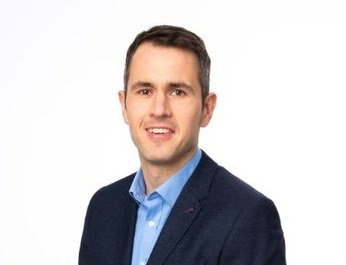
“My experience of Irish in school was a pretty typical one. From very early on, probably in National School, I decided it wasn’t for me. It didn’t come naturally, it was too much effort, and most importantly, I couldn’t see the point. At that time, the only place Irish existed outside the classroom for me was on signposts. And they were also in English. That attitude persisted until well after my Leaving Certificate (where I sat Pass Irish and left the exam hall after the minimum 45 minutes). But overtime my attitude changed and I eventually decided to do something about it.
In Autumn of 2023 I did a short online course over a number of weeks. The course organiser also put me in touch with an Irish speaker who chatted to me over the phone once a week. That was a game changer. I repeated the trick in Spring of 2024 and again, my Irish came on. But since then, I’ve plateaued – reduced to Duolingo and the odd podcast or a snippet of a basic audiobook. What I need is another “leap forward”. Something to get me speaking again, and growing my vocabulary and confidence.
My aim in all of this is simple – to be capable of holding a basic conversation with someone. I don’t need to be able to explain the third law of thermodynamics. I just want to be able to chat to an Irish speaker if I meet them on the street.
Maybe 2025 will be the year I manage it.”
_________
Ciara O’Halloran (@ADubInDerry ar Twitter/X)
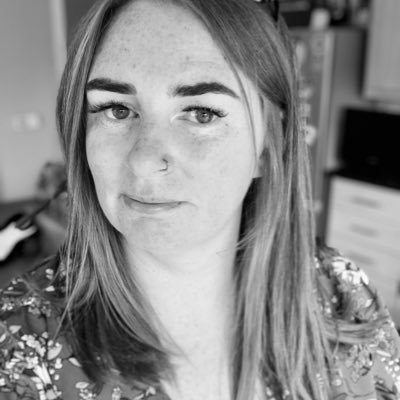
“My name is Ciara O’Halloran. I never really excelled at Gaeilge in school but I was always proud to use what focal I could. Growing up in Dublin, I was lucky to meet lots of different people who were using Gaeilge daily and even for their jobs, it inspired me further. Now, I live in Derry and my daughter attends naíscoil here. I work in a school myself and teach some words to the children there too. Our language is what grounds us, it’s intrinsically linked to the physical land and our collective past. I look forward to continuing to improve my Gaeilge with my family.”
__________
Lorna Johnson, New Zealand/Aotearoa (@moukenainzo ar Twitter/x agus @mouke.bsky.social)
Many people will be familiar with Lorna who has learned Irish to a very good standard in 4 years, and is active in using her Irish on social media.

“Seo mo pleananna maidir leis an nGaeilge:
-An dara bliain don Ard-Dioplóma sa Ghaeilge a chríochnú
-Cuir tús le MA sa Ghaeilge
-Mí a chaitheamh in Éireann ag déanamh staidéir ar an nGaeilge
-Píosa scríbhneoireachta i nGaeilge a fhoilsiú
-Finish the second year of the Higher Diploma in Irish
-Start an MA in Irish
-Spend a month in Ireland studying Irish
-Publish a piece of writing in Irish”
__________
Irene Castro, Castille – La Mancha/Dublin (@nitrogliceiryna@bsky.social)

“Dia duit! My name is Irene, and I started to learn Irish before I moved to Dublin for a few months. I have always been interested in learning languages, so the existence of such a special language attracted my attention. When I could experience what daily life is like with the language and the amount of effort there is from the culture to keep it alive, I couldn’t help but fall more in love with the Irish culture. Moreover, within the artistic field, in which my profession is framed, there are exciting initiatives that help me learn the language more and enjoy something that I love in a different way.
I started – like many people – by trying the Duolingo course. Although I don’t believe it is enough, it has helped me to have a very progressive and pleasant approach. Now, I understand simple phrases and some words, but it is still a challenge for me as a native Spanish speaker learning Irish requires me to have an advanced level of English. So, my challenge for this year is to improve the Irish language and its presence in English and to be able to read a short book in Irish.”
__________
Treasa Ní Catháin (@keanetracie ar Twitter)
“Nuair a bhí mé i mo leanbh, ceapaim go raibh mé difriuil i gcomparáid le mo theaglach. Níor thuig mé go hiomlán é agus freisin nuair a bhí me níos sine. Ach thuigim é anois – bhí an fonn orm a rudaí eile a dhéanamh, taithí a fháil ar rudaí eile. Ach bhí eagla orm na rudaí a dhéanamh.
Tar éis tamaill, dhéan mé na rudaí difriula agus anois ba mhaith liom “dul ar ais”.
Bhí eagla orm mo chiud Ghaeilge a úsáid nuair a bhí mé óg, bhí mé an neirbhíseach agus go tobann, bhí sé imithe.
Níl eagla orm faoin Ghaeilge níos mó. Tá teangacha difriúila agam anois, ach anois tá Ghaeilge ag teastáil uaim. Tá mé ag teacht ar ais.”
__________
Robert Hilliard, Iowa (Robby Hilliard on Facebook)
“I have been studying the Irish language for about five years now. I began by attending an Irish Immersion Weekend in Iowa. Shortly after that, the pandemic struck, and, as with so many other things, life went online. I found several online schools in Ireland and in the USA, several of which I would highly recommend. Currently, I am studying with a local study group and a tutor, and I am thrilled at the progress.”
__________
Dáire Ó Néill (@DaireONeill24 ar Twitter/X)
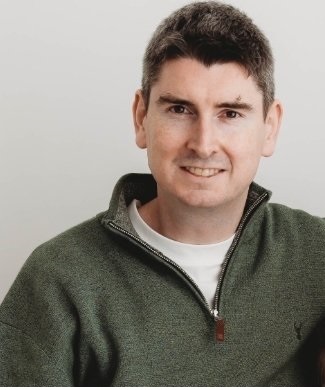
“The Irish language is more than words passed from one mouth to another; it’s the loom that threads us into the weave of who we are, binding us to the shadowed fields of our past. Speaking it to my children, I feel its weight, its warmth—a spade turned gently in familiar soil. Each word is a seed I place carefully in their care, knowing it will take hold, knowing it will rise.
When I speak Irish, it’s as if I’m sharing a little piece of magic with them. I love how my daughter Fianna responds with the occasional word in Irish or when I sing *Pós an Píobaire* (badly and out of tune) to Éire. It’s in those moments that I see how language becomes more than words.
Occasionally, in Derry of all places, I notice children listening in on our little conversations, their faces full of curiosity and wonder. They are students at one of the three Gaelscoileanna. I smile at them and ask, “Caidé mar atá tú?” (How are you?). Their faces light up with joy, and they answer eagerly, their Irish flowing so naturally and beautifully.
We share a short conversation—simple questions about their day and their favourite things at school. But there is something magical about it. They turn to their parents, their little faces glowing with pride as they share what had just happened. Their parents look on with such pride. I’ve never met a parent who regretted sending their child to the Gaelscoil.
Seeing the children’s confidence and happiness filled my heart. It reminded me of how the Irish language creates something deeper than words—it nurtures pride, belonging, and love, not just in the children but in their families too. Moments like this are why I speak Irish to my own children every day. It’s a gift, not just for them but for all of us.
For parents who feel uncertain about their own Irish, know this: your effort matters more than your fluency. Using even a few phrases at home can make a huge difference for your children. Websites like http://abair.ie, http://tearma.ie, http://teanglann.ie, and http://logainm.ie are incredible tools, but so too are small, everyday moments. A simple Go raibh maith agat (Thank you) or Oíche mhaith (Good night) can be a starting point. The journey to bilingualism is a gift—not just for your child, but for you. It’s an opportunity to rediscover a language that connects us all to something bigger than ourselves: our community, our history, and our shared future.”
__________
Buíochas le Kieran Cuddihy, Ciara O’Halloran, Lorna Johnson, Irene Castro, Treasa Ní Catháin, Robery Hilliard agus Dáire Ó Néill!
 Irish Language matters
I’m an American, vaguely competent in French and Melanesian Pisin, able to get by in Spanish. But now I’m writing a book on Irish history (Cromwell’s campaign in 1649-50), so it behooves me to learn more than a little Irish. Suggestions for a (mostly) New Yorker?
LikeLike